Sustainability Nexus
  • Home
  • Ramboland
  • Team
  • Contact
  • More
    • Home
    • Ramboland
    • Team
    • Contact

  • Home
  • Ramboland
  • Team
  • Contact

energy Info popup sample

sample energy pop-up Content

How most American cities work: Energy

The reality is that energy in most American cities is centralized, loss-heavy, fragile, dirty, inequitable, unhealthy, and dangerous. 

​

Hubs we call power-plants are a few vulnerable dots on the map, nodes in a system they would collapse by failing,  struggling to keep the entire cardiovascular-like system of the energy grid glowing despite huge swings in production and demand, increasingly frequent natural disasters, terrorism, and tactical warfare. For the most part these strained juggernauts either belch out toxic emissions, and/or emissions that are already beginning to thermally skew the balances of our current atmosphere, biosphere, hydrosphere, pedosphere, etc., or they are producing types of waste that will remain a threat to Life longer than any of our current languages have been used on Earth - demanding the impossible task of creating signage to warn of the peril they present that will be definitely understandable hundreds of thousands or millions of years from now is next to impossible. 

​

So the desperate, despotic, and/or vengeful have singular nodes in the form of mostly dirty and dangerous power-plants they can attack to threaten so many at once, and even the system as a whole. Not only are the regions each power plant serves huge, but the region supported by each juggernaut is limited in its ability to support any others, unless we're lucky enough for the disruptions in one to align with moderate or low stresses in nearly all the others.

​

Along with all these downsides, these juggernauts and the technology they are based upon enabled incredible progress, luxury, and wealth. And if that arc is to continue we must adapt the system, to allow the juggernauts to retire in honor, for the workers that support them to be honored and thanked, and supported in their transition to other roles. The surpluses of the new pattern can allow this to happen. 

Read more about how energy COULD work in most American cities here/below: 


How most American cities COULD work: Energy


In a healthy village...

…All energy capacity and needs are understood by many if not all villagers. In times and places in which energy “technologies” amounted only to caloric human efforts, wood burning, and even onsite coal fired furnaces, this meant that villagers were sustainably managing their own usage as well as forest and other fuel source systems within a short travel distance so they never ran out of fuel. Tolerances of much broader temperature swings or extremes were also usually much higher. Architecture almost always accounted for solar angles, prevailing winds, obstructions of both, opportunities to utilize both in energy production / storage, like thermal mass adobe, cross ventilation, stack-effect “roof” openings, evaporative cooling from water bodies and plants, and more. All of these systems and techniques were both teaching tool and subject at once, so that physics, village management, and sacred elements were all learned about simultaneously. 

In addition to restoring these “passive” techniques to contemporary construction and management of our habitats, there can be modern American expressions of these elegant and ubiquitously understood vernacular approaches to energy. In a modern American urban neighborhood going through self-directed re-villaging (instead of externally driven economic development, and the gentrification and displacement that almost always comes with it) would likely involve a Community Development Corporation or another candidate entity to serve as a genuinely well-intended positive change agency. This entity would first organize neighbors to be aware, informed, and capable to self-direction, if they are not already (many neighborhoods are, and many are not). 

​

Next focus could shift beyond typical economics-only driven real estate developments that lay bare the landscapes of the neighborhood, vulnerable to vampiric developers who simply want to buy low, sell high, and never really be present in the Place. Instead the shift would be to initiatives like establishing a network of upgraded roofs covered in solar PV, as an extension of already common but underutilized weatherization programs. Furthermore, community held landtrusts or even POA’s (Property Ownership Associations) or a new entity type called an LSA (Land Stewardship Association) which honors the reality of land-personhood, as well as the need to interface with the current paradigm of land ownership. Regardless of entity type, these would establish the permanency and resident ownership and dividend access for managing “central plants” at the core of the block or in vacant rowhomes or lots,, to which upgraded solar roofs would all be tied. Ultimately these manage surpluses of energy across the block to expand to block-centralized heating and cooling, and other beneficial energy uses like pumping rainwater for collection, treatment, and distribution from roofs and even street surfaces for direct distribution of higher-than-utility quality water to homes and agriculture on all utilizable surfaces. This “nanogrid” (because even at block scale this is smaller than most microgrids) would eventually become part of a cellularly-networked mesh of nano-grids connected by physical cabling if power company franchise rights were frozen or redistributed to the CDC’s or RCO’s, or via EV battery exchange choreography (sounds crazy, but transitioning from entrenched, damaging, extractive, cynical systems can involve some pretty counter-intuitive solutions), especially when topography allows for heavy transport of batteries and water downhill, and lighter harvested crops back uphill.  

​

This early establishment of stable, clean, cheap, community managed energy systems creates some resilience amongst existing residents, and establishes steady revenue for an entity, directed by the residents, which can then self-development and/or self-manage others utilizing many alternatives to the typical vampiric approaches to toxic, un-durable and unendurable, intrusive versions of bricks and mortar or bricks and sticks physical homes and other infrastructure developments discussed throughout the rest of this file. 
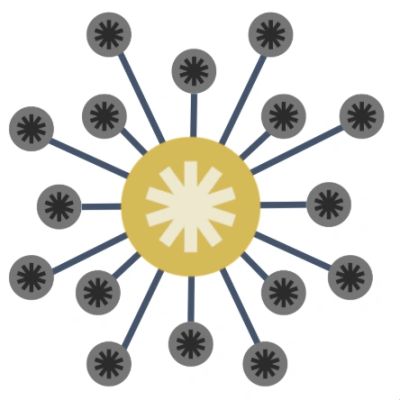
explore energy and other elements on the "vignettes" page of ramboland's educational digital twin

https://www.rambo.land/#Vignettes

go to full site

Full text from info pop-up

How most American cities COULD work: Energy

In a healthy village...

…All energy capacity and needs are understood by many if not all villagers. In times and places in which energy “technologies” amounted only to caloric human efforts, wood burning, and even onsite coal fired furnaces, this meant that villagers were sustainably managing their own usage as well as forest and other fuel source systems within a short travel distance so they never ran out of fuel. Tolerances of much broader temperature swings or extremes were also usually much higher. Architecture almost always accounted for solar angles, prevailing winds, obstructions of both, opportunities to utilize both in energy production / storage, like thermal mass adobe, cross ventilation, stack-effect “roof” openings, evaporative cooling from water bodies and plants, and more. All of these systems and techniques were both teaching tool and subject at once, so that physics, village management, and sacred elements were all learned about simultaneously. 

In addition to restoring these “passive” techniques to contemporary construction and management of our habitats, there can be modern American expressions of these elegant and ubiquitously understood vernacular approaches to energy. In a modern American urban neighborhood going through self-directed re-villaging (instead of externally driven economic development, and the gentrification and displacement that almost always comes with it) would likely involve a Community Development Corporation or another candidate entity to serve as a genuinely well-intended positive change agency. This entity would first organize neighbors to be aware, informed, and capable to self-direction, if they are not already (many neighborhoods are, and many are not). 


Next focus could shift beyond typical economics-only driven real estate developments that lay bare the landscapes of the neighborhood, vulnerable to vampiric developers who simply want to buy low, sell high, and never really be present in the Place. Instead the shift would be to initiatives like establishing a network of upgraded roofs covered in solar PV, as an extension of already common but underutilized weatherization programs. Furthermore, community held landtrusts or even POA’s (Property Ownership Associations) or a new entity type called an LSA (Land Stewardship Association) which honors the reality of land-personhood, as well as the need to interface with the current paradigm of land ownership. Regardless of entity type, these would establish the permanency and resident ownership and dividend access for managing “central plants” at the core of the block or in vacant rowhomes or lots,, to which upgraded solar roofs would all be tied. Ultimately these manage surpluses of energy across the block to expand to block-centralized heating and cooling, and other beneficial energy uses like pumping rainwater for collection, treatment, and distribution from roofs and even street surfaces for direct distribution of higher-than-utility quality water to homes and agriculture on all utilizable surfaces. This “nanogrid” (because even at block scale this is smaller than most microgrids) would eventually become part of a cellularly-networked mesh of nano-grids connected by physical cabling if power company franchise rights were frozen or redistributed to the CDC’s or RCO’s, or via EV battery exchange choreography (sounds crazy, but transitioning from entrenched, damaging, extractive, cynical systems can involve some pretty counter-intuitive solutions), especially when topography allows for heavy transport of batteries and water downhill, and lighter harvested crops back uphill.  


This early establishment of stable, clean, cheap, community managed energy systems creates some resilience amongst existing residents, and establishes steady revenue for an entity, directed by the residents, which can then self-development and/or self-manage others utilizing many alternatives to the typical vampiric approaches to toxic, un-durable and unendurable, intrusive versions of bricks and mortar or bricks and sticks physical homes and other infrastructure developments discussed throughout the rest of this file. 


Read more about energy works in most American cities here (pasted in below). 


How most American cities DO work: Energy


The reality is that energy in most American cities is centralized, loss-heavy, fragile, dirty, inequitable, unhealthy, and dangerous. 

​

Hubs we call power-plants are a few vulnerable dots on the map, nodes in a system they would collapse by failing,  struggling to keep the entire cardiovascular-like system of the energy grid glowing despite huge swings in production and demand, increasingly frequent natural disasters, terrorism, and tactical warfare. For the most part these strained juggernauts either belch out toxic emissions, and/or emissions that are already beginning to thermally skew the balances of our current atmosphere, biosphere, hydrosphere, pedosphere, etc., or they are producing types of waste that will remain a threat to Life longer than any of our current languages have been used on Earth - demanding the impossible task of creating signage to warn of the peril they present that will be definitely understandable hundreds of thousands or millions of years from now is next to impossible. 

​

So the desperate, despotic, and/or vengeful have singular nodes in the form of mostly dirty and dangerous power-plants they can attack to threaten so many at once, and even the system as a whole. Not only are the regions each power plant serves huge, but the region supported by each juggernaut is limited in its ability to support any others, unless we're lucky enough for the disruptions in one to align with moderate or low stresses in nearly all the others.

​

Along with all these downsides, these juggernauts and the technology they are based upon enabled incredible progress, luxury, and wealth. And if that arc is to continue we must adapt the system, to allow the juggernauts to retire in honor, for the workers that support them to be honored and thanked, and supported in their transition to other roles. The surpluses of the new pattern can allow this to happen. 

Copyright © 2023 Sustainability Nexus, INC. dba Regenerative Nexus - All Rights Reserved.

Powered by